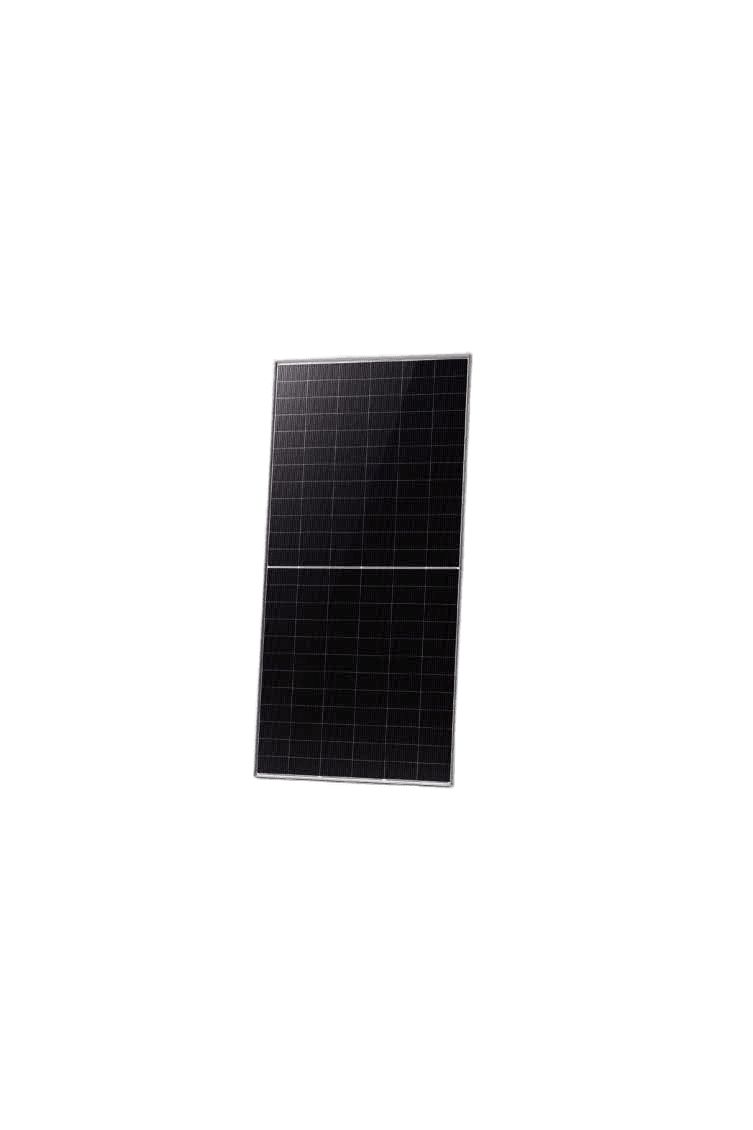
The best solar panel depends on the roof. Five datasheet figures to compare, with the Jinko model that leads on each one in this 80-model catalogue.
There is no best solar panel. There is a best panel for a short roof, another for a roof at 45 °C, another for a white gravel yard and another for a buyer who wants the longest cover on paper. Lists that crown one model skip the only useful question, which is: best at what? This page answers it with five figures every datasheet prints, and names the model in this 80-panel Jinko catalogue that leads on each. We stock one maker, so this is not a ranking of brands; it is a way to read any brand.
Products mentioned in this article
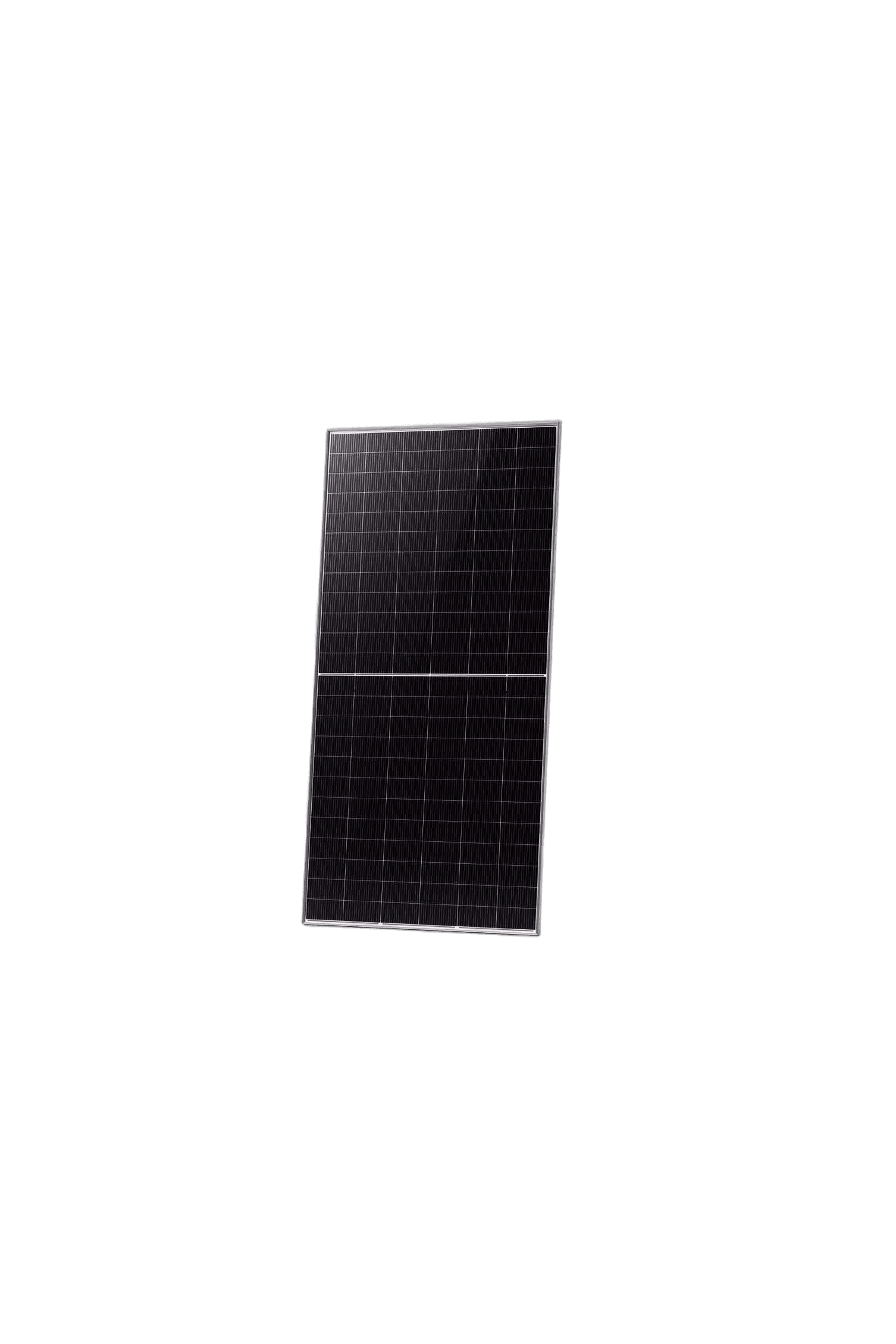
N-Type Mono-Facial Solar Panel 545 W
- Maximum Power (Pmax):545W
- Module Efficiency:24.27%
N-Type Bifacial Solar Panel 670 W (66QL6-BDV-F2)
- Maximum Power (Pmax):670W
- Module Efficiency:24.80%
N-Type Bifacial Solar Panel 670 W SafetyKing
- Maximum Power (Pmax):670W
- Module Efficiency:24.80%
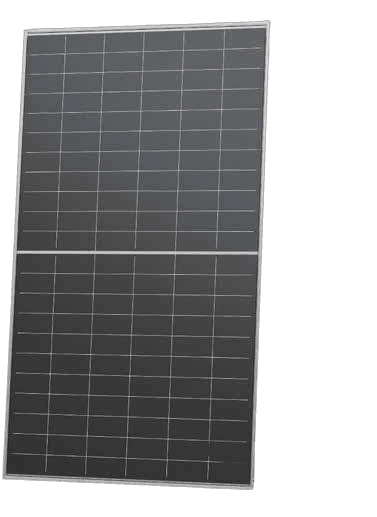
N-Type Bifacial Solar Panel 735 W
- Maximum Power (Pmax):735W
- Module Efficiency:23.66%
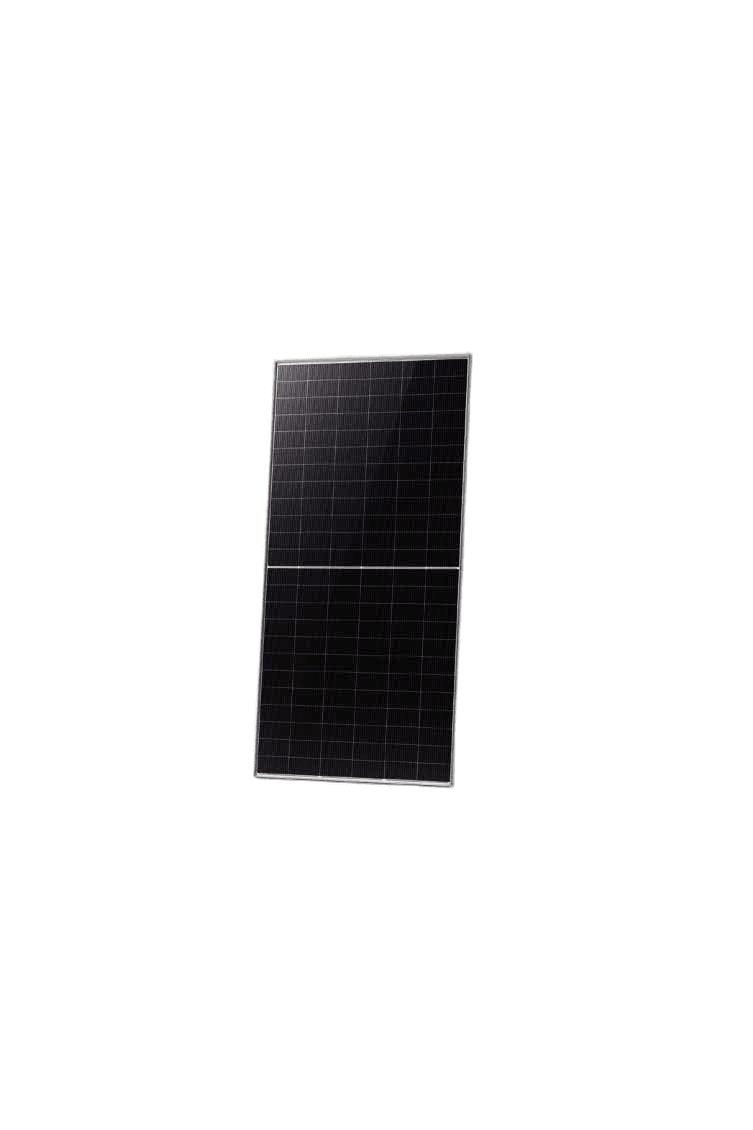
N-Type Mono-Facial Solar Panel 475 W (48HL4M-DB-Z3)
- Maximum Power (Pmax):475W
- Module Efficiency:23.77%
1. Module efficiency: watts per square metre
Efficiency is the rated power divided by the area of the panel under standard light. It matters when the roof is the limit, and only then. Across the catalogue it runs from 22.26% to 24.80%.
- The highest figure, 24.80%, is stated by the 670 W modules of the 66QL6 line, such as the JKM670N-66QL6-BDV-F2.
- In a shorter frame, the JKM545N-54QL6-DV-F1 states 24.27% in 1980 × 1134 mm.
- The largest panel is not the most efficient: the 735 W module states 23.66%.
On a 30 m² roof, the gap between 22.26% and 24.80% is about 760 W of extra capacity. On an open field it is worth nothing, because land is not the constraint.
2. Temperature coefficient: what heat takes back
A panel is rated at a cell temperature of 25 °C and loses a fixed percentage for every degree above it. The records split into two groups: 32 models state −0.26 %/°C (every 54QL6 and 66QL6 model), 40 state −0.29 %/°C, and 8 records state no figure.
Take two 650 W panels with cells at 65 °C, 40 degrees over the rating point. The −0.26 module gives 650 × (1 − 0.104) = 582 W; the −0.29 module gives 650 × (1 − 0.116) = 575 W. Seven watts per panel sounds small. On a 20-panel villa array it is the output of a quarter of a panel, every hot afternoon, for the life of the system. Our article on N-type against P-type cells explains where the difference comes from.
3. Bifacial factor: whether the back face works
A bifacial module also collects light on its rear glass, and the datasheet says how well. The bifacial 66QL6 records state a factor of 85 ± 5%; the 66HL4M and 78HL4 records state 80 ± 5%. Three families are mono-facial and collect nothing from behind: the 450–475 W DB-Z3 and DV-Z4 and the 525–545 W 54QL6.
This figure only pays when there is light under the array: a raised frame over pale ground, a carport, a white membrane roof. Flat against dark tiles, a bifacial panel behaves like a mono-facial one. The bifacial guide shows the multiplication.
4. Build: glass, weight and fire class
Most models in the range state 2.0 mm glass front and back and an IEC fire type of Class C. One line differs on all three counts: the SafetyKing models, such as the JKM670N-66QL6-BDX-SafetyKing-F2, state 2.5 mm glass on each face, Class A, and 40.5 kg against 32.5 kg for the same frame. If an insurer or a site rule asks for Class A, that requirement chooses the panel before any efficiency figure does.
Two coated versions answer site problems rather than performance tables: the anti-dust 670 W module and the anti-glare 665 W module. Buy them when dust or reflected glare is the actual constraint.
5. Warranty: read the two numbers separately
Every record carries two terms. The performance term is 30 years on all 80 models. The product term is not uniform: 12 years on 51 models, 15 years on 23, and 25 years on the six mono-facial DB-Z3 models from 450 W to 475 W, such as the JKM475N-48HL4M-DB-Z3. If the product term is your first criterion, the answer is a 475 W panel, not the 735 W flagship.
So which one is best?
| If your limit is | Compare | Leader in this catalogue |
|---|---|---|
| Roof area | Efficiency | 670 W 66QL6 models, 24.80% |
| A short or awkward roof | Efficiency in a short frame | JKM545N-54QL6-DV-F1, 24.27% in 1,980 mm |
| Heat | Temperature coefficient | The 32 models at −0.26 %/°C |
| Light under the array | Bifacial factor | Bifacial 66QL6 models, 85 ± 5% |
| Fire rules, exposed sites | Glass and fire class | SafetyKing, 2.5 mm glass, Class A |
| Longest product term | Product warranty | DB-Z3 models, 25 years |
| Fewest pieces to mount | Watts per panel | JKM735N-66HL5-BDV-Z6, 735 W |
No single row wins every line, which is the point. The 670 W 66QL6 models come closest, leading on efficiency, heat and bifacial factor together, but they carry the 12-year product term and a 2,382 mm frame that does not fit every roof.
Turn the choice into a quantity
Once the model is chosen, the count is arithmetic. The sizing calculator turns your appliances or your bill into an array in kWp and a number of panels, and the ready-made systems show complete parts lists for an apartment, a house, a villa, a shop, an office and a farm. Every figure quoted here can be checked on the family datasheet, for example the 650–670 W 66QL6 datasheet and the 525–545 W datasheet, and all 80 models are listed in the solar panel catalogue. The price on each product page is the price you pay; orders are collected in store in Dubai or Riyadh.
Frequently Asked Questions
What is the best solar panel for a home?
Is a higher efficiency panel always better?
Which Jinko panel has the longest product warranty?
Which is the best solar panel brand?
Ready to order?
Every unit in the catalogue carries its price — add it to the cart and order online, then collect it from our store in Dubai or Riyadh.