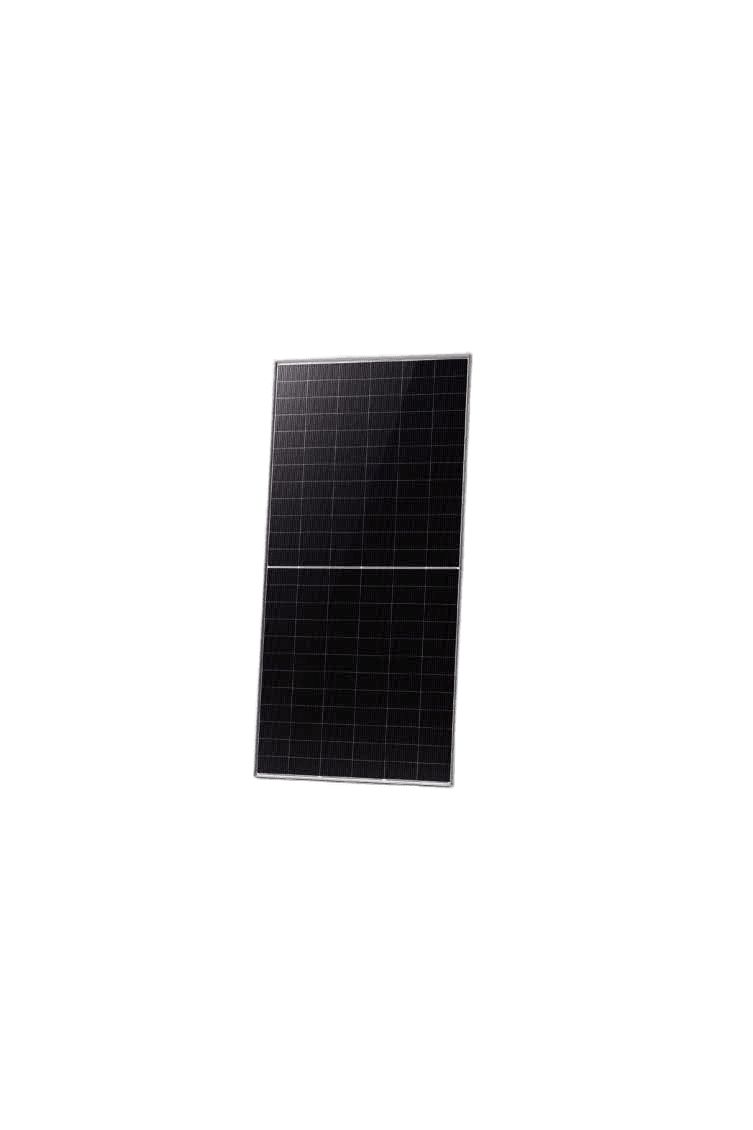
Panels needed to run a 1, 1.5 or 2 ton air conditioner in Saudi Arabia, the UAE and Iraq, counted with Jinko 545 W modules and the calculator rule.
An air conditioner is the reason most homes in the Gulf look at solar in the first place, and it is also the easiest load to size: it has one rating and it runs for a known part of the day. The answer for a 1.5 ton unit in Saudi Arabia is four panels of 545 W. The rest of this page shows where that four comes from, and when it becomes three, five or eight.
Products mentioned in this article
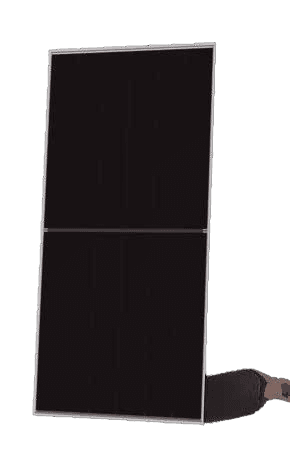
N-Type Bifacial Solar Panel 670 W Anti-Dust
- Maximum Power (Pmax):670W
- Module Efficiency:24.80%
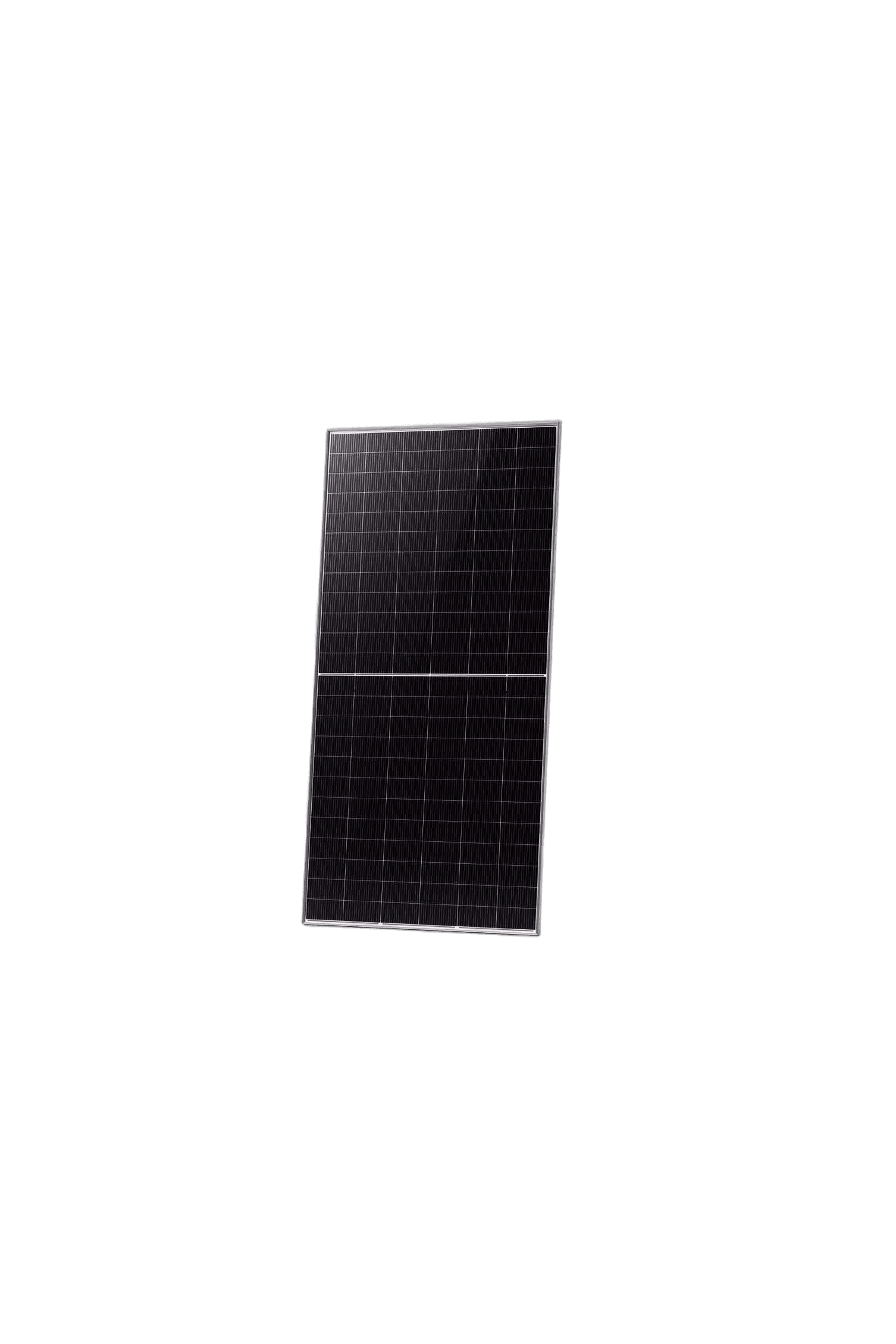
N-Type Mono-Facial Solar Panel 545 W
- Maximum Power (Pmax):545W
- Module Efficiency:24.27%
What the calculator assumes about an air conditioner
Our system sizing calculator carries three air conditioner sizes. Each has a running power, and the sizing engine counts each for eight hours a day:
| Air conditioner | Running power | Energy over 8 hours |
|---|---|---|
| 1 ton | 900 W | 7.2 kWh |
| 1.5 tons | 1,200 W | 9.6 kWh |
| 2 tons | 1,800 W | 14.4 kWh |
It also applies a start-up factor of 3 to a compressor, which matters for the inverter and not for the panels: a 1.5 ton unit that runs at 1,200 W is sized as a 3,600 W peak.
From kWh to panels
The array is the daily energy divided by the harvest per installed kilowatt: peak sun hours × 0.8. The calculator's table holds 5.8 peak sun hours for Saudi Arabia, 5.7 for the UAE and 5.4 for Iraq. The module it proposes from this catalogue is the Jinko 545 W N-type module (JKM545N-54QL6-DV-F1).
For the 1.5 ton unit in Saudi Arabia: 9.6 ÷ (5.8 × 0.8) = 9.6 ÷ 4.64 = 2.07 kWp. Divide by 545 W: 3.8, so 4 panels. The whole table:
| Load | Saudi Arabia | UAE | Iraq |
|---|---|---|---|
| One 1 ton unit | 3 panels | 3 panels | 4 panels |
| One 1.5 ton unit | 4 panels | 4 panels | 5 panels |
| One 2 ton unit | 6 panels | 6 panels | 7 panels |
| Two 1.5 ton units | 8 panels | 8 panels | 9 panels |
Iraq needs one more panel on every row. Nothing is wrong with the module; 5.4 sun hours simply yield less per kilowatt than 5.8.
Why not fewer?
A common shortcut says a 1,200 W air conditioner needs 1,200 W of panels, so three of 470 W. It fails for two reasons that are both in the numbers.
The panel is rated at 25 °C and the air conditioner runs when it is hottest. The record of the 545 W module states a temperature coefficient of −0.26 %/°C. With cells at 65 °C, which is 40 degrees above the rating point, the module gives 10.4% less: about 488 W instead of 545 W. The 0.8 in the formula is the allowance for this and for dust and wiring.
The array must cover the day, not the instant. Eight hours of cooling need 9.6 kWh, and the panels have about 5.8 full-power hours to produce it. That is why the sum works in kWh and not in watts.
Our guide to dust, heat and glare in Gulf conditions puts numbers on the soiling side of the same allowance.
The inverter and battery lines
Panels alone do not run a compressor. The calculator adds two lines sized from the same load:
- Inverter. Sized on the start-up peak, rounded up to a whole kilowatt: 3 kW for a 1 ton unit, 4 kW for 1.5 tons, 6 kW for 2 tons, and 5 kW for two 1.5 ton units, because only one compressor is assumed to start at a time.
- Battery. Only if you want cooling when the grid is down or after sunset. Four hours of backup for a 1.5 ton unit is 9.6 × 4 ÷ 24 = 1.6 kWh, which one 5.12 kWh module covers. With no grid at all, the full 9.6 kWh has to be stored: two modules, and the array grows to 5 panels because the off-grid performance ratio is 0.75.
This store's catalogue holds panels, so on the result these two lines are sizes to match, not named models. The ready-made pages show the same structure for a whole home: the apartment with evening backup counts one air conditioner with a fridge, lights, TV and washing machine, and the off-grid apartment shows what removing the grid does to the battery line.
Wiring four panels: check the voltage
The 545 W record states 34.70 V at maximum power and 40.46 V open-circuit. Four modules in one series string therefore deliver about 138.8 V in operation and 161.8 V open-circuit at the rating temperature, and a little more on a cold morning. Both figures have to sit inside the input window of the inverter you choose; that window is printed on the inverter's own datasheet. Every electrical row for the module is on the 525–545 W family datasheet.
Which module for a hot, dusty roof
Any module in the catalogue can supply an air conditioner; the count changes with the wattage. Two records are worth a look on a Gulf roof:
- The 545 W module states −0.26 %/°C and 24.27% efficiency in a 1980 × 1134 mm frame, which suits a small roof.
- The 670 W anti-dust module (JKM670N-66QL6-BDV-L-AntiDust-F1) states the same −0.26 %/°C and 24.80% efficiency; for two 1.5 ton units, seven of them do the work of eight 545 W modules.
Run your own numbers
Open the calculator, add your air conditioners at their real size, then the rest of each room. If you cool for twelve hours instead of eight, scale the air conditioner rows of the table by one and a half. Prices for Saudi buyers are on the Saudi Arabia page; the price shown on a product page is the price you pay, and orders are collected in store in Riyadh or Dubai.
Frequently Asked Questions
How many solar panels do I need to run a 1.5 ton air conditioner?
Can an air conditioner run on solar panels without a battery?
What size inverter does a 1.5 ton air conditioner need on solar?
How many solar panels does a 1 HP motor need?
Ready to order?
Every unit in the catalogue carries its price — add it to the cart and order online, then collect it from our store in Dubai or Riyadh.