How many solar panels a house needs, worked out in three steps: daily kWh, peak sun hours and module watts, with Jinko 470 W to 735 W examples.
A house does not need "about twenty panels". It needs the number that comes out of three figures: what the house uses in a day, how many peak sun hours the site gets, and the wattage printed on the module. This guide does the sum in the open, with the rule our solar sizing calculator applies and with modules from this catalogue, so you can redo it with your own figures.
Products mentioned in this article
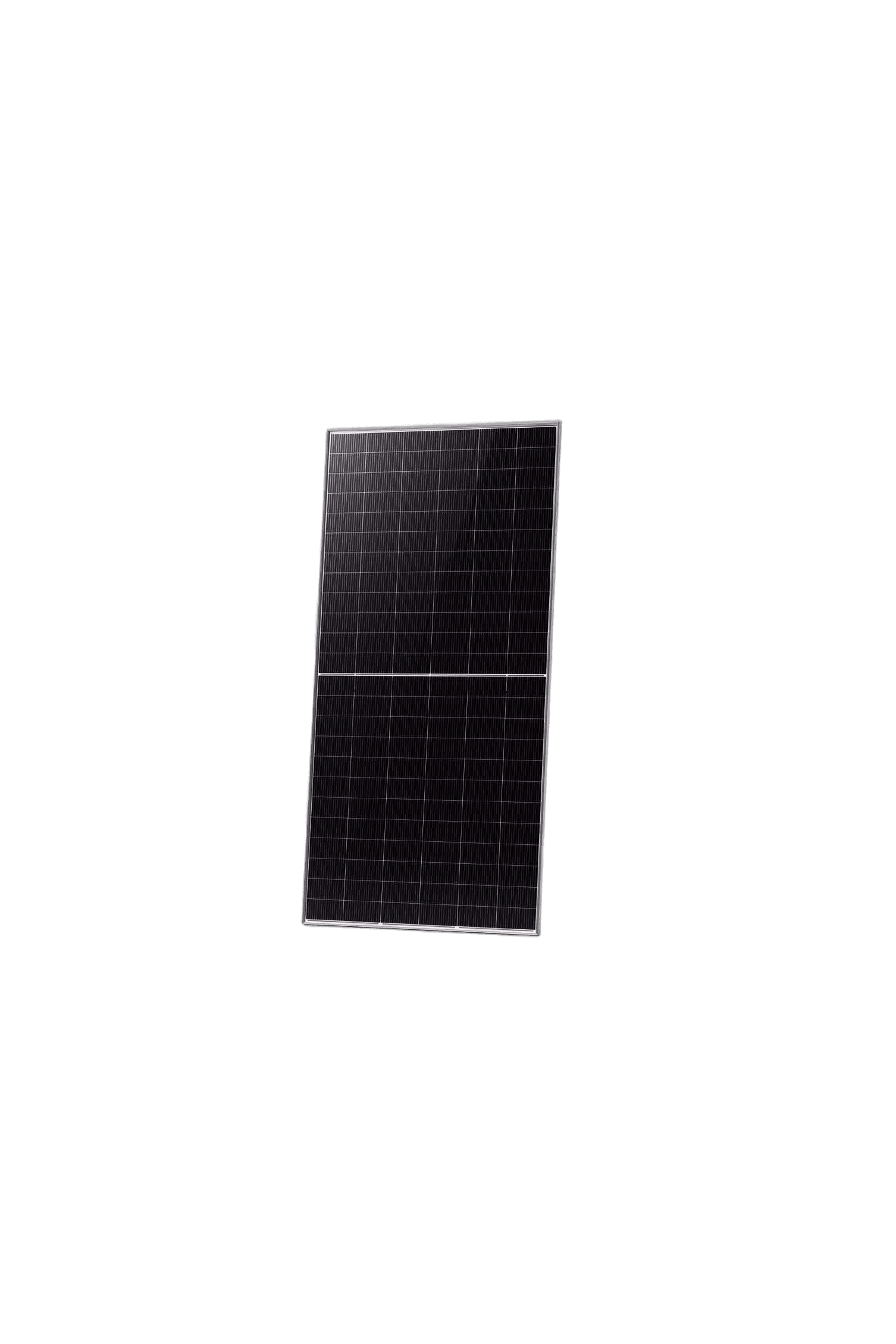
N-Type Mono-Facial Solar Panel 545 W
- Maximum Power (Pmax):545W
- Module Efficiency:24.27%
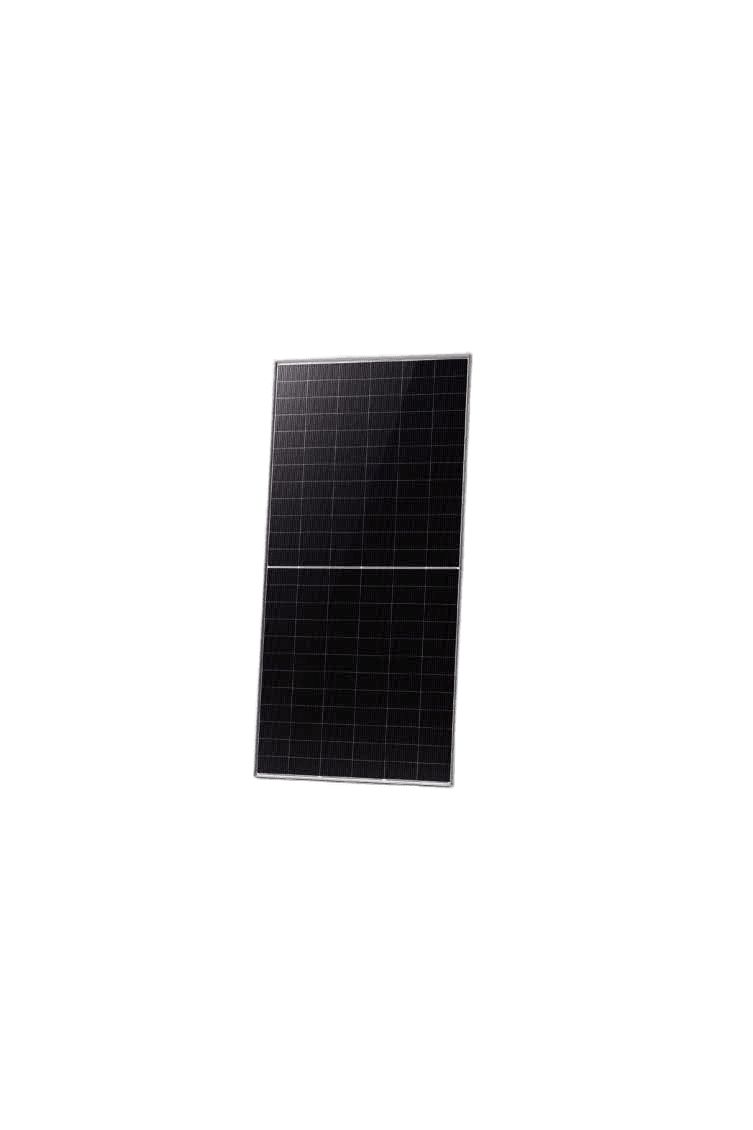
N-Type Bifacial Solar Panel 470 W (48HL4M-BDV-Z2)
- Maximum Power (Pmax):470W
- Module Efficiency:23.52%
N-Type Bifacial Solar Panel 670 W (66QL6-BDV-F2)
- Maximum Power (Pmax):670W
- Module Efficiency:24.80%
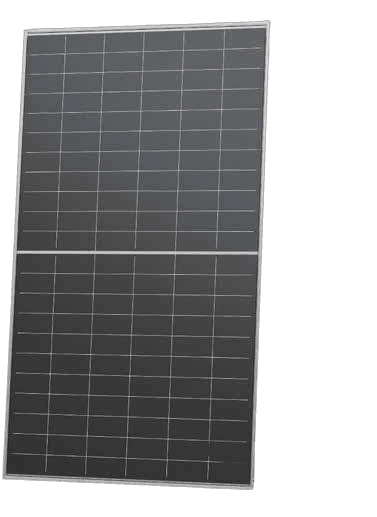
N-Type Bifacial Solar Panel 735 W
- Maximum Power (Pmax):735W
- Module Efficiency:23.66%
The rule the calculator uses
The array size is the daily energy divided by the sun it can be harvested with:
array (kWp) = daily use (kWh) ÷ (peak sun hours × 0.8)
The 0.8 is the performance ratio: the allowance for heat, dust, cable and conversion losses on a system that works alongside the grid. For a system with no grid at all the calculator uses 0.75. The number of modules is the array divided by one module's rated watts, rounded up, because nobody sells a fifth of a panel.
Peak sun hours come from a short table inside the calculator: 5.7 for the UAE, 5.8 for Saudi Arabia, 5.6 for Qatar, Kuwait and Bahrain, 5.7 for Oman, 5.4 for Iraq and 3.7 for France. Lebanon, Syria, Yemen and Sudan have no figure in that table; there the engine works with 5.0 and reports that the value was assumed.
Step 1: what the house uses in a day
The ready-made "house" system on this site starts from a typical family home. Its appliances, their running watts and their daily hours are these:
| Appliance | Running watts | Hours a day | Energy a day |
|---|---|---|---|
| 2 air conditioners (1.5 tons each) | 2 × 1,200 W | 8 | 19.2 kWh |
| Fridge | 150 W | 8 | 1.2 kWh |
| Lights and Wi-Fi | 200 W | 8 | 1.6 kWh |
| TV | 100 W | 6 | 0.6 kWh |
| Washing machine | 800 W | 1 | 0.8 kWh |
| Kitchen (microwave and kettle) | 2,000 W | 1 | 2.0 kWh |
| Total | 25.4 kWh |
Two things stand out. Cooling is three quarters of the day's energy, so the honest way to shrink an array is to count air conditioners, not light bulbs. And if you hold an electricity bill, you can skip the list: the calculator also starts from the kWh figure printed on a bill.
Step 2: from kWh to kilowatts of panels
Take that house in the UAE: 25.4 ÷ (5.7 × 0.8) = 25.4 ÷ 4.56 = 5.57 kWp. The same house in other markets we serve:
| Market | Peak sun hours | Array for 25.4 kWh a day |
|---|---|---|
| Saudi Arabia | 5.8 | 5.47 kWp |
| UAE | 5.7 | 5.57 kWp |
| Iraq | 5.4 | 5.88 kWp |
| France | 3.7 | 8.58 kWp |
The house did not change; the sun did. A French roof needs over half as much array again as a roof in Dubai for the same daily energy. The system pages on this site are sized with the UAE figure, the country the store is in, so a reader elsewhere should redo this one line.
Step 3: from kilowatts to a number of panels
The sizing engine proposes the module in the catalogue closest to 550 W, which here is the Jinko 545 W N-type mono-facial module (JKM545N-54QL6-DV-F1): 5,570 W ÷ 545 W = 10.2, so 11 panels and 6.0 kWp installed. In France the same sum gives 8,581 ÷ 545 = 15.7, so 16 panels.
The count moves with the wattage you choose, but the glass area hardly does. For the UAE house:
| Module | Rated power | Panels for 5.57 kWp | Total module area |
|---|---|---|---|
| JKM470N-48HL4M-BDV-Z2 | 470 W | 12 | 24.0 m² |
| JKM545N-54QL6-DV-F1 | 545 W | 11 | 24.7 m² |
| JKM670N-66QL6-BDV-F2 | 670 W | 9 | 24.3 m² |
| JKM735N-66HL5-BDV-Z6 | 735 W | 8 | 24.9 m² |
Areas are the glass alone, from each record's dimensions (1762 × 1134 mm, 1980 × 1134 mm, 2382 × 1134 mm and 2384 × 1303 mm). The engine allows 2.6 m² of roof per panel to leave room for gaps and walkways, which is why the system page shows about 29 m² for the 11-panel array. Fewer, larger panels mean fewer clamps and connectors; shorter panels fit around a water tank or a stair head. Our guide to choosing panel wattage works through that trade on a real roof.
Other homes, same sum
The other starting points, sized for the UAE with the 545 W module:
- Apartment (one air conditioner, fridge, lights, TV, washing machine): 13.8 kWh a day, 3.03 kWp, 6 panels.
- House (the example above): 25.4 kWh a day, 5.57 kWp, 11 panels.
- Villa (four air conditioners, fridge, freezer, two lighting circuits, two TVs, washing machine, water pump, kitchen): 49.5 kWh a day, 10.86 kWp, 20 panels.
Each is published as a ready-made system page with its parts list: the on-grid system for a house, the house with evening backup and the on-grid system for a villa.
What changes the answer
- Running without the grid. The performance ratio drops to 0.75, so the same house needs 5.94 kWp. That still rounds to 11 of the 545 W module, but the system now needs batteries for the night.
- Hot roofs. The 545 W record states a temperature coefficient of −0.26 %/°C, and the 0.8 ratio already carries an allowance for it. The datasheet of the 525–545 W family prints the figure for every wattage.
- Your real hours. Eight hours of cooling is the engine's assumption. A home that cools for twelve hours needs half as much again for that line, and the array follows in the same proportion.
Do it with your own figures
Open the calculator, pick the home closest to yours or type the kWh from your bill, and adjust the appliances room by room. It returns the array in kWp, the number of Jinko modules, the roof area they cover, and inverter and battery lines sized in kW and kWh. This store sells panels, so those two lines are sizes to match rather than named models. The price on each product page is the price you pay, and orders are collected in store in Dubai or Riyadh.
Frequently Asked Questions
How many Jinko panels does a typical home need?
How many panels do I need for 10 kWh a day?
Does a higher-wattage panel reduce the roof area I need?
Can I size from my electricity bill instead of listing appliances?
Ready to order?
Every unit in the catalogue carries its price — add it to the cart and order online, then collect it from our store in Dubai or Riyadh.