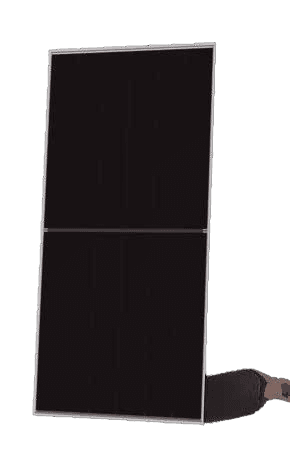
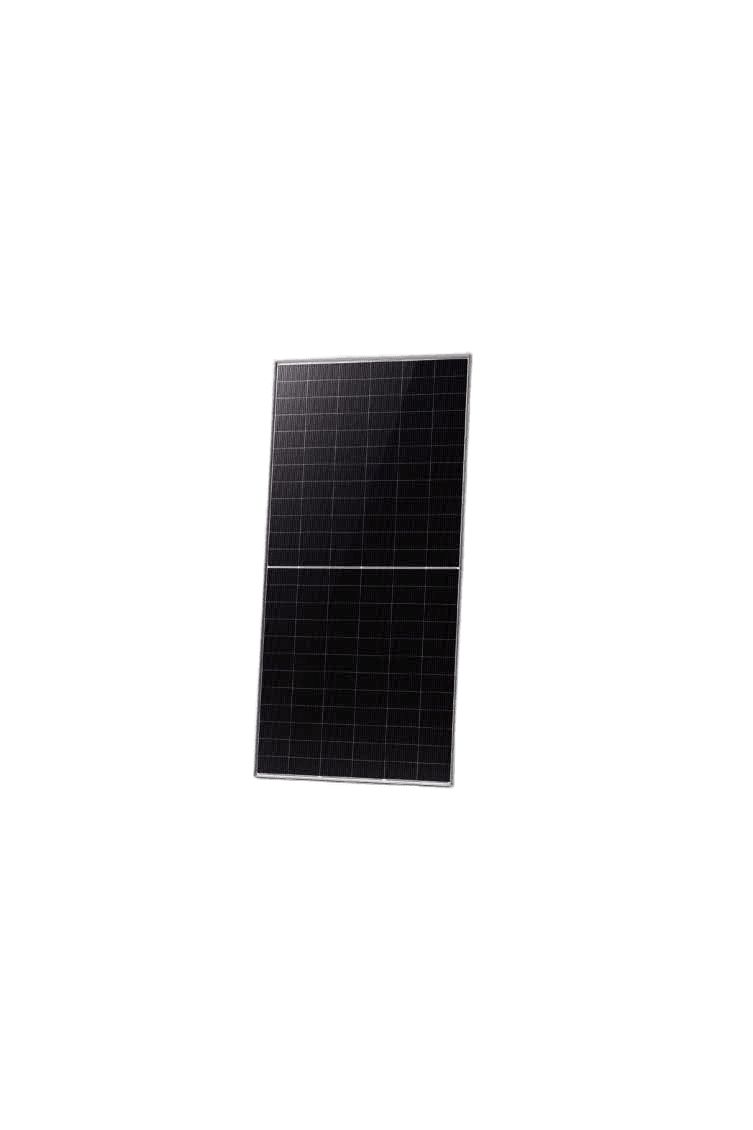
What a ready-made solar kit with battery contains: the Jinko panel count, the inverter size and the battery kWh for an apartment, a house and a villa.
"Solar kit" is sold as a box with a number on it. The useful question is what is inside the box, and why. This site publishes its kits as open parts lists: each page under ready-made solar systems shows how many panels, what size of inverter and how many kilowatt-hours of battery a given home needs, and the arithmetic behind every line. This article reads those lists for you.
Products mentioned in this article
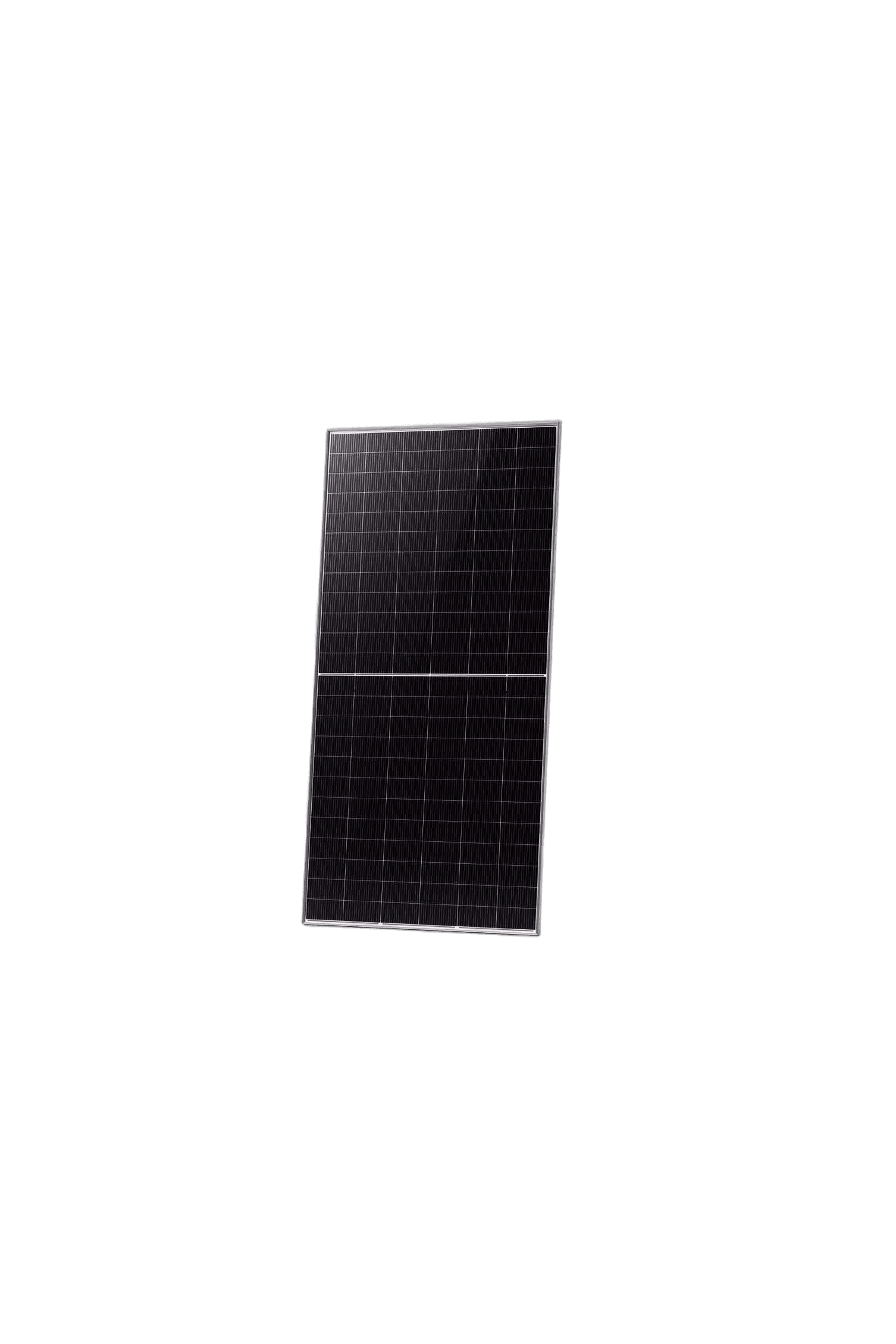
N-Type Mono-Facial Solar Panel 545 W
- Maximum Power (Pmax):545W
- Module Efficiency:24.27%
Three lines in every kit
Every kit is built from the same three lines:
- Panels. These are real Jinko modules from our catalogue. The engine picks the module closest to 550 W, which is the Jinko 545 W N-type module (JKM545N-54QL6-DV-F1), and counts how many are needed.
- Inverter. Sized to the peak load of the home, rounded up to the next full kilowatt. This store sells panels, so the inverter line is a size to match, not a named model.
- Battery. Only in a kit with backup or with no grid. It is counted in modules of 5.12 kWh, again as a size rather than a named product.
A grid-tied kit has no battery line at all: the grid covers the night.
The house kit, line by line
The house the engine starts from uses 25.4 kWh a day, mostly two air conditioners, with a peak load of 8.05 kW when everything runs together. In the UAE, with 5.7 peak sun hours and a 0.8 performance ratio, the array is 25.4 ÷ 4.56 = 5.57 kWp. At 545 W a module that is 10.2, so 11 panels, about 29 m² of roof. The inverter line is 9 kW (8.05 kW rounded up).
Now the battery. The engine sizes it from the hours you want covered:
| Kit | Hours covered | Battery energy | 5.12 kWh modules |
|---|---|---|---|
| House, grid-tied | 0 | none | 0 |
| House, evening backup | 4 h | 4.23 kWh | 1 |
| House, overnight backup | 8 h | 8.47 kWh | 2 |
| House, off-grid | a full day | 25.4 kWh | 5 |
The battery energy is the day's use times the hours divided by 24: 25.4 × 8 ÷ 24 = 8.47 kWh for the overnight kit, and 8.47 ÷ 5.12 = 1.65, so two modules. The off-grid kit has to carry a whole day, which is why it holds five modules, and its array is sized with a 0.75 ratio instead of 0.8: 5.94 kWp, which still rounds to 11 panels of 545 W.
Apartment and villa kits
The same rules give these sizes for the UAE:
| Home | Use a day | Panels (545 W) | Inverter | Battery, overnight kit | Battery, off-grid kit |
|---|---|---|---|---|---|
| Apartment | 13.8 kWh | 6 | 5 kW | 4.6 kWh, 1 module | 13.8 kWh, 3 modules |
| House | 25.4 kWh | 11 | 9 kW | 8.47 kWh, 2 modules | 25.4 kWh, 5 modules |
| Villa | 49.5 kWh | 20 (22 off-grid) | 12 kW | 16.5 kWh, 4 modules | 49.5 kWh, 10 modules |
Two things are worth noticing. A battery does not change the number of panels on a grid-tied home: the house kit has 11 panels with or without backup. And the off-grid villa needs two more panels than the grid-tied one, because the lower 0.75 ratio asks the array to cover more losses. The villa kit with overnight backup shows the four-module battery line in full.
Why the panel is a 545 W module
The engine aims for a module near 550 W because it is a common size that two people can carry and that fits most roofs in portrait. The 545 W record states 1980 × 1134 mm and a temperature coefficient of −0.26 %/°C; the full table for the 525–545 W family is on its datasheet. If your roof suits a bigger panel, the count falls: 5.57 kWp is 9 modules of 670 W or 9 of 620 W instead of 11 of 545 W, for about the same glass area. All our modules are on the solar panels page.
Make your own kit
The kits are starting points, not a fixed box. Open the solar sizing calculator, choose apartment, house or villa or type the kWh from your bill, pick grid-tied, evening backup, overnight backup or off-grid, and it returns the same three lines for your figures. The arithmetic of the panel line is explained step by step in how many solar panels a house needs. The price on each panel's page is the price you pay, and orders are collected in store in Dubai or Riyadh.
Frequently Asked Questions
What is in a solar panel kit with battery?
How many battery modules go in the off-grid house kit?
Does adding a battery change the number of panels?
Why are the inverter and battery lines not named models?
Ready to order?
Every unit in the catalogue carries its price — add it to the cart and order online, then collect it from our store in Dubai or Riyadh.