Power from both faces
The rear side works at 85% of the front's output, turning light reflected off the surface below into extra kilowatt-hours.
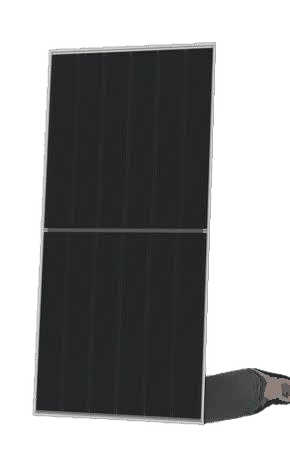
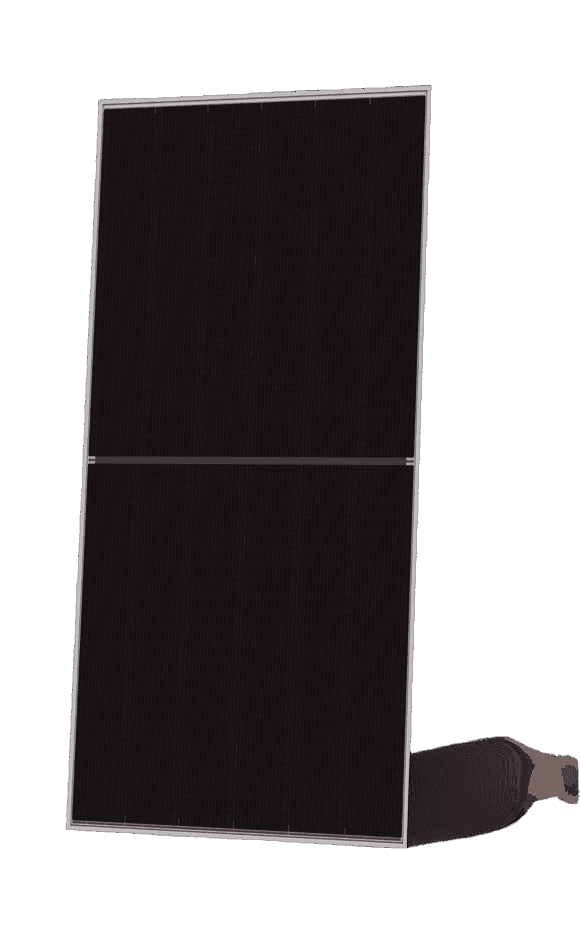
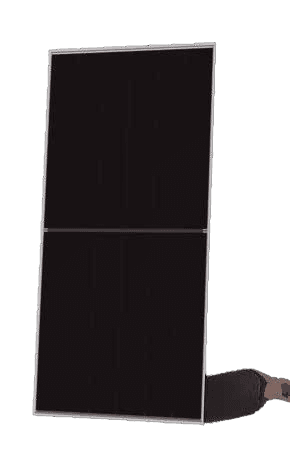
A dual-glass N-Type Bifacial 670 W SafetyKing that harvests light on both faces, so every row of the array turns more of the day into usable power.
In stock
Built on Jinko's N-type TOPCon cells and sealed between two 2.5 mm sheets of glass, this bifacial module also collects the light bouncing off the ground or roof beneath it, adding roughly a tenth again to what the front face alone delivers. It belongs on ground-mounted plants, carports and flat commercial roofs where that reflected light is real. A Class A fire rating, 55 mm hail testing and 7000 Pa front-load certification keep it earning through weather that stops lesser panels. This model: Module Efficiency 24.80%, Maximum Power (Pmax) 670W.
Specifications last updated 20 August 2026
| Maximum Power - Pmax | 670 W |
|---|---|
| Maximum Power Voltage - Vmp | 42.92 V |
| Maximum Power Current - Imp | 15.61 A |
| Short-circuit Current - Isc | 16.34 A |
| Open-circuit Voltage - Voc | 50.60 V |
| Module Efficiency STC | 24.80 % |
| Cell Type | N- type Mono-crystalline |
|---|---|
| Dimensions | 2382×1134×30 mm |
| Weight | 40.5 kg |
| Front Glass | mm |
| Frame | Anodized Aluminium Alloy |
| Junction Box | IP68 Rated |
| Connector Type | JK03M / JK03M2 / Others* |
| Pallet Dimensions | 2442×1140×1251mm |
| Specifications (STC) Maximum Power - Pmax | 670 |
| Bifacial Factor | 85 ± 5% |
| Temperature Coefficient of Pmax | -0.26 %/°C |
| No. of Cells | 264 (66×4) |
| Maximum Series Fuse Rating | 35 A |
| Output Cables (Including Connector) | ≥4.0 mm2 (+): 500 mm , (-): 400 mm or Customized Length |
| Protection Class | Class II |
|---|---|
| Maximum System Voltage | 1500 VDC (IEC) |
| IEC Fire Type | Class A |
Gulf sites lose more to dust than to heat. What soiling, 70 °C cells and airport glare rules really cost — and which Jinko N-type build answers each one.
Read: Dust, Heat and Glare: Choosing Panels for Gulf Conditions →Cell chemistry in plain language — LID, PID, temperature coefficient and the degradation curve — read off Jinko's own N-type datasheets, including where N-type is not worth paying for.
Read: N-Type vs P-Type Solar Panels: The Year-Ten Difference →The rear face works at 85 plus or minus 5% of the front's efficiency. Measured at Jinko's bifacial conditions, with 135 W per square metre reaching the back, the module reads about 12% above its front-only rating. The real gain depends on what sits underneath: pale gravel, white membrane or a raised ground mount deliver it, dark asphalt gives back very little.
Twelve years on the product itself and thirty years of linear power output. Jinko warrants at least 88.85% of the rated power still being produced in year thirty.
Each module measures 2382 by 1134 by 30 mm and weighs 40.5 kg in an anodised aluminium frame, so plan on two people per panel on a roof. Shipping goes 36 pieces to a pallet, two pallets to a stack, and 576 pieces in a 40 ft high-cube container.