Two working faces
The back face converts light reflected off the roof or ground, adding output the front alone would miss.
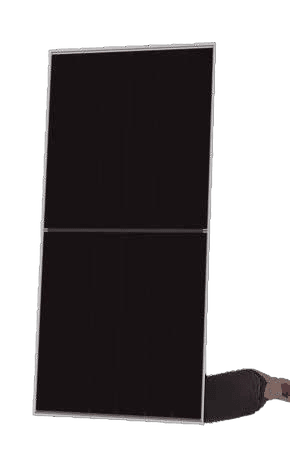
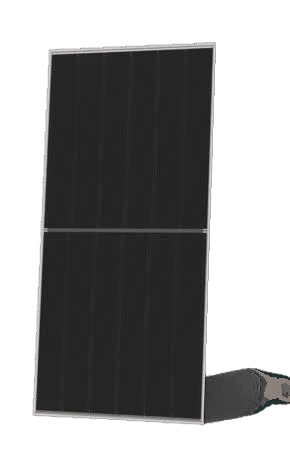
A dual-glass bifacial panel that works on both faces and sheds dust on its own, so long rows keep earning through hot, dusty seasons. This model: Module Efficiency 24.06%, Maximum Power (Pmax) 650W.
In stock
An N-Type Bifacial 650 W Anti-Dust for large rooftops, commercial sheds and ground-mounted farms, where light bouncing off the roof or the ground is picked up by the back face and turned into extra kilowatt-hours. Glass on both sides and an anodised aluminium frame stand up to heavy snow, wind pull and salty or dusty air, while a self-cleaning surface and a sealed junction box keep output steady between service visits.
Specifications last updated 20 August 2026
| Maximum Power - Pmax | 650 W |
|---|---|
| Maximum Power Voltage - Vmp | 42.57 V |
| Maximum Power Current - Imp | 15.27 A |
| Short-circuit Current - Isc | 15.98 A |
| Open-circuit Voltage - Voc | 50.26 V |
| Module Efficiency STC | 24.06 % |
| Cell Type | N- type Mono-crystalline |
|---|---|
| Dimensions | 2382×1134×30 mm |
| Weight | 32.5 kg |
| Front Glass | 2.0 mm, Anti-reflection Coating |
| Back Glass | 2.0 mm, Heat Strengthened Glass |
| Frame | Anodized Aluminium Alloy |
| Junction Box | IP68 Rated |
| Connector Type | JK03M / JK03M2 / Others* |
| Pallet Dimensions | 2396×1110×1251mm |
| Packing Detail | 36 pcs/pallet, 72 pcs/stack, |
| Bifacial Factor | 85 ± 5% |
| Power Sorting | 0 ~ +3 % |
| Temperature Coefficient of Pmax | -0.26 %/°C |
| Temperature Coefficient of Isc | 0.046 %/°C |
| No. of Cells | 264 (66×4) |
| Operating Temperature | -40°C~ +70 °C* |
| Bifaciality Coefficents | φVoc: 98±5 %, φIsc: 85±5 %, φPmax: 85±5 % |
| Output Cables (Including Connector) | 4.0 mm2 (+): 500 mm , (-): 400 mm or Customized Length |
| IEC Fire Type | Class C |
|---|---|
| Maximum System Voltage | 1500 VDC (IEC) |
| Protection Class | Class II |
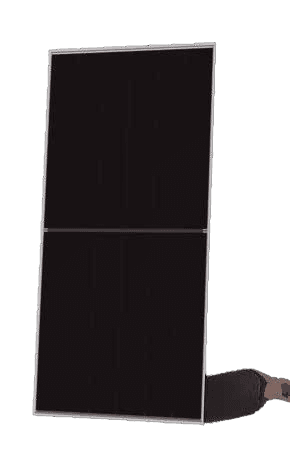
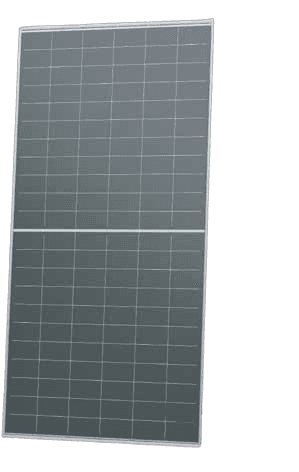
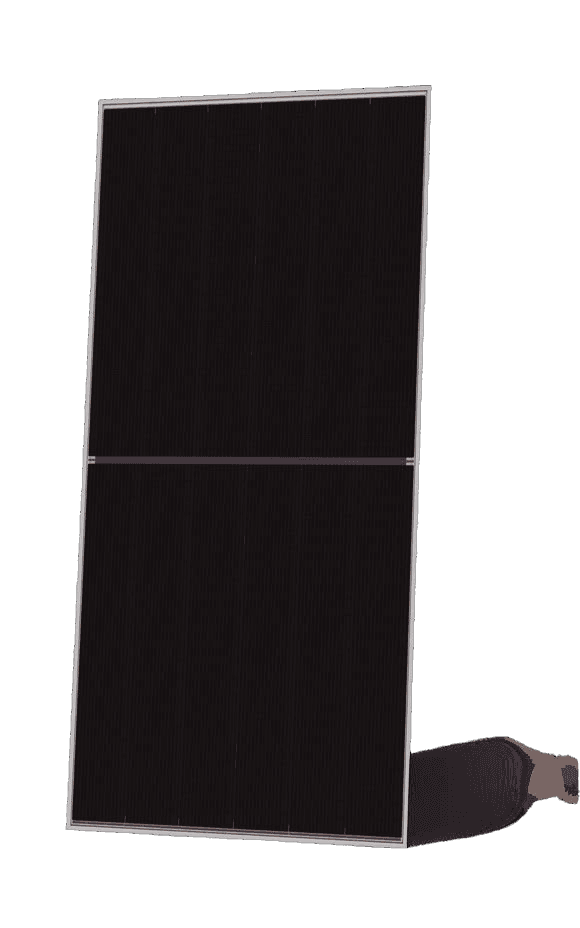
Jinko's datasheets put a real number on the rear face. Here is what bifaciality, albedo and mounting height are worth — and when to buy a mono-facial panel instead.
Read: Bifacial Panels: What the Second Face Actually Earns →Gulf sites lose more to dust than to heat. What soiling, 70 °C cells and airport glare rules really cost — and which Jinko N-type build answers each one.
Read: Dust, Heat and Glare: Choosing Panels for Gulf Conditions →The rear face is rated at 85% (plus or minus 5%) of the front. On the datasheet's bifacial rating, with modest light returning off the ground, each panel measures about 11% above its front-side rating; over a bright white roof or light gravel the gain is larger, over dark ground smaller.
Twelve years on the product itself and thirty years on output. The guarantee allows at most 1% loss in the first year and 0.35% a year after that, so the panel is still promised 88.85% of its day-one power in year 30.
Each panel is 2382 x 1134 x 30 mm and weighs 32.5 kg, in an anodised aluminium frame certified to 5400 Pa of load at the front and 2400 Pa at the rear. Panels ship 36 to a pallet, two pallets to a stack.